
"Yemeni flavor profiles"
95 article(s) found

What are the Kenyan coffee brewing steps for the Kenyan PB coffee brand?
For professional baristas, please follow the profile of the coffee workshop (official Wechat account cafe_style): this raw bean comes from the Chakney processing plant in Neri and comes from the surrounding family farm. About 2023 coffee trees have been planted on 0.5 acre (about 250 square meters) of land. Neri has always been a classic coffee producing area in Kenya. Relying on Mount Kenya, it has advantages suitable for coffee growth.

African Coffee Uganda Coffee production area Uganda Coffee treatment & hand-made Ugandan coffee flavor
Professional coffee knowledge exchange more coffee bean information please follow coffee workshop (Wechat official account cafe_style) Ugandan coffee is almost unheard of in the boutique coffee industry. This country has always been dominated by the cultivation of Robusta. In recent years, with the vigorous development of coffee production, Uganda has also begun to grow Arabica coffee beans, and the local government has also set up to manage coffee cultivation.

Classification, price, raw beans and roasting of TOP pearl round beans PB boutique coffee beans in Kaili, Kenya
For professional baristas, please follow the profile of the coffee workshop (official Wechat account cafe_style): this raw bean comes from the Chakney processing plant in Neri and comes from the surrounding family farm. About 2023 coffee trees have been planted on 0.5 acre (about 250 square meters) of land. Neri has always been a classic coffee producing area in Kenya. Relying on Mount Kenya, it has advantages suitable for coffee growth.
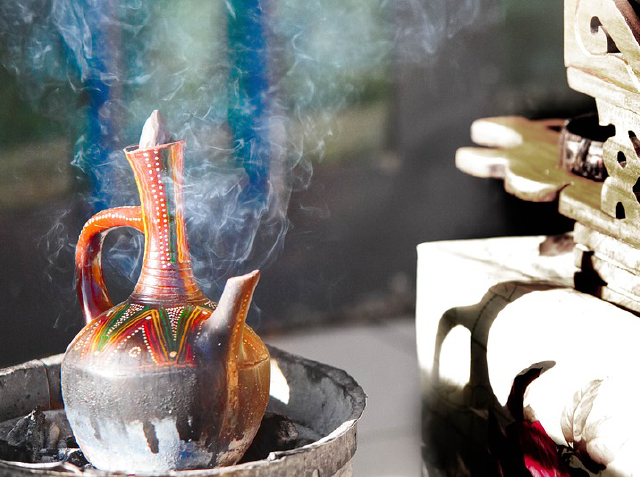
Classification and Flavor characteristics of Ethiopian Coffee Bean Heirloom varieties introduced in Ethiopian Fine Coffee producing areas
Ethiopia, the birthplace of coffee, has a number of boutique coffee producing areas, producing popular high-quality coffee beans, such as Yega Xuefei, Guoding Ding Ding, Sakui and so on. Each producing area will have its own flavor characteristics. Follow Qianjie Coffee to learn about it.

Colombia Coffee Tibica Coffee Grinding Degree Roast Degree Treatment Method
Ethiopia, home of coffee, is also known for its famous coffee. From wild coffee to modern plantations, people can still find a variety of coffee growing methods here. There are two production areas: Hara in the north-east Hara Plateau and Yerkah in the middle. Hara coffee has a charming aroma, mostly sun-dried treatment, taste light, often known as coffee in the red wine

A brief introduction to the English name and taste of mocha coffee how is mocha coffee made
Professional coffee knowledge exchange more coffee bean information please pay attention to the coffee workshop (Wechat official account cafe_style) the advantages and disadvantages of drinking mocha coffee: 1. Coffee contains certain nutrients. Nicotinic acid in coffee contains vitamin B, which is higher in roasted coffee beans. And there are free fatty acids, caffeine, tannic acid and so on. two。 Coffee is good for the skin. Coffee

[Qianjie Coffee looking for beans] Solar Micro-batch feature report on Andabeth Manor in Kenya
Professional coffee knowledge exchange more coffee bean information please follow the coffee workshop (Wechat official account cafe_style) [Qianjie Coffee search] original: Qianjie Coffee Qianjie Coffee yesterday ▲ click to follow | focus on the 6th anniversary of coffee roasting more boutique coffee beans please add private Wechat Qianjie, WeChat: (long:

Introduction of Kiambu producing area of Kenyan Coffee and Coffee Bean flavor and taste
Professional coffee knowledge exchange more coffee bean information please follow the coffee workshop (Wechat official account cafe_style) KenyaAB Kiambu Gitwe Kenya AB Komatina cranberry production area: Qianbu Micro area: Gitwe soil: volcanic clay altitude: 1400 m-1800 m varieties: Lmur28, SL-34, Ruiru 11 treatment: Kenyan 72-hour washing 01 | production

Variety introduction, baking analysis and brewing suggestion of Komatina cranberry coffee producing area in Kenya AB
Professional coffee knowledge exchange more coffee bean information please follow the coffee workshop (Wechat official account cafe_style) KenyaAB Kiambu Gitwe Kenya AB Komatina cranberry production area: Qianbu Micro area: Gitwe soil: volcanic clay altitude: 1400 m-1800 m varieties: Lmur28, SL-34, Ruiru 11 treatment: Kenyan 72-hour washing 01 | production

Brief introduction of Sidamo Coffee Bean Sidamo Coffee Flavor
Civet coffee (Kopi Luwak) is a recently invented coffee, produced in Indonesia, coffee beans are one of the civets' food range, but the coffee beans cannot be completely digested by the digestive system. The coffee beans are fermented in the civets' intestines and stomach and excreted by the feces. The locals take out the coffee beans in the civet feces and then do the processing, that is, the so-called Kopi Luwak, the taste of this coffee.
General situation of coffee varieties
◆ all column document list (use the right mouse button pop-up menu) ID select article title update time category Click HTML permission to read the publisher to operate 142650 coffee in the inferior acid how to avoid? [photo] 2021-05-27 Coffee knowledge 56 not generated for review not opened Jin 142422 Robusta Coffee beans Robbins Taga, Vietnam

Introduction to the main Coffee producing areas in the World
Coffee comes from coffee beans, which are harvested and processed from the fruit of trees. Coffee trees grow at the center of the equator, between latitudes of 25 degrees south and north, and are called the homes of tropical or subtropical countries called coffee belts. At present, there are about 60 coffee-producing countries. Coffee is produced in South America, Central America, the West Indies, Asia, Africa, Arabia, the South Pacific and
Introduction of major coffee producing areas in the world Central and South American coffee beans, African coffee beans, Asian coffee beans
[introduction] Coffee comes from coffee beans, which are harvested and processed from the fruit of trees. Coffee trees grow at the center of the equator, between latitudes of 25 degrees south and north, and are called coffee belts in the homes of tropical or subtropical countries. at present, raw coffee comes from coffee beans, which are harvested and processed from the fruits of the trees. Coffee trees grow at the center of the equator.

A brief introduction to the introduction to Coffee roasting, the complete Book of Coffee self-baking
When the author published the first edition of this book in 1996, roasting coffee beans at home was something that only tireless coffee addicts would do. At that time, roasting coffee beans was a very difficult thing to master, and roasters had to work hard to find a way to roast coffee beans to a moderate brown. Today, individuals still roast coffee beans at home.

The introduction to coffee roasting recommends the complete Book of Coffee self-baking.
When the author published the first edition of this book in 1996, roasting coffee beans at home was something that only tireless coffee addicts would do. At that time, roasting coffee beans was a very difficult thing to master, and roasters had to work hard to find a way to roast coffee beans to a moderate brown. Today, individuals still roast coffee beans at home.